Mapping AI Governance: Unpacking the Critical Axes of Democratic Values and Domestic Enforceability
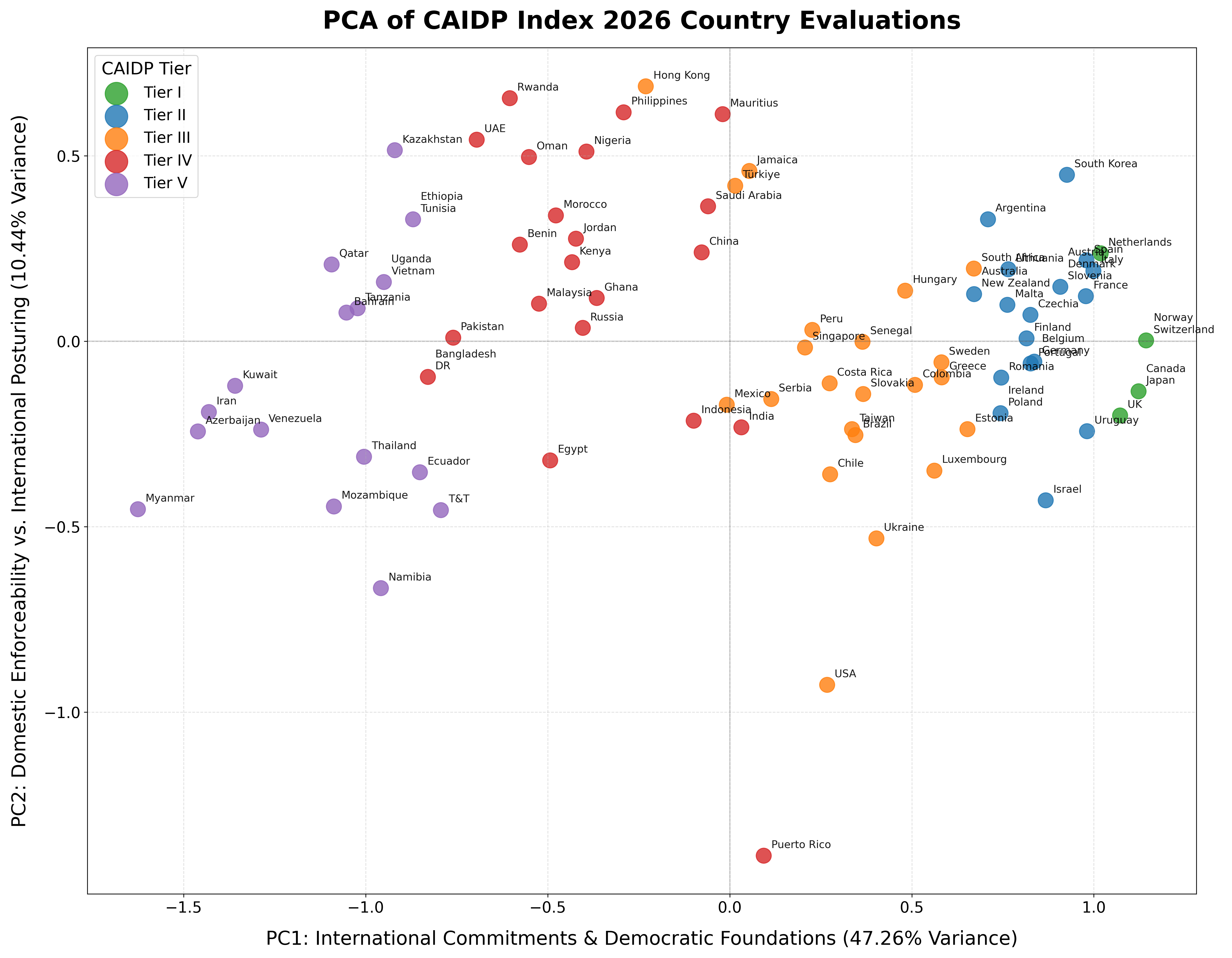
The Center for AI and Digital Policy recently published the Artificial Intelligence and Democratic Values 2026 (CAIDP Index), a comprehensive evaluation of 90 countries across 12 dimensions.
The report is an excellent resource. To add another layer of analysis, I wanted to explore how the 12 dimensions cluster together. I ran a quick statistical breakdown (principal component analysis) to summarize these dimensions into two key axes, which are displayed in the graph above.
Here are the two dominant themes I found:
- Y-Axis: Enforceability. Countries towards the top demonstrate more domestic regulatory enforceability (hard laws on algorithmic transparency, dedicated oversight bodies, and written domestic policies). Countries towards the bottom lean heavily into international treaties and pledges (like the CoE Treaty and OECD principles), potentially lagging on producing hard domestic enforcement agencies of their own.
- X-Axis: Democratic Governance. This axis captures elements like human rights compliance and the endorsement of major international alignment frameworks that represent the global consensus on AI governance. Countries towards the right are more likely to be participating in international AI democratic treaties and have broad human rights frameworks in place.
This view highlights an important tension in global AI policy: a strong international consensus on ethical goals (X-axis) versus a developing domestic capacity for enforcement (Y-axis).
Code on GitHub